AI Tools for Small Business: Which Ones Are Actually Worth Using?
The number of AI tools available to small businesses has roughly tripled since 2023. Every week brings a new product with a landing page promising to "10x your productivity." Most small business owners either try three tools in a weekend and give up, or avoid the category entirely and wait for someone else to figure it out.
Neither response is optimal. The smarter approach is to ignore the category labels — "AI writing tool," "AI image generator," "AI assistant" — and start with a different question: what is the highest-volume, lowest-value task in your operation right now? The answer determines which tool, if any, is worth your time.
Why Most AI Tool Assessments Miss the Point
The majority of AI tool comparisons rank products on features: how many integrations, how fast the generation, how polished the interface. These comparisons are written for people who enjoy evaluating software. They are not written for a florist with two employees who needs to answer customer emails faster.
The relevant variable is not feature breadth. It is fit between the tool's capability and the specific task you need done. A powerful tool solving a problem you rarely have is worth less than a modest tool solving something that happens twenty times a day.
With that framing, here is an honest assessment of the main categories.
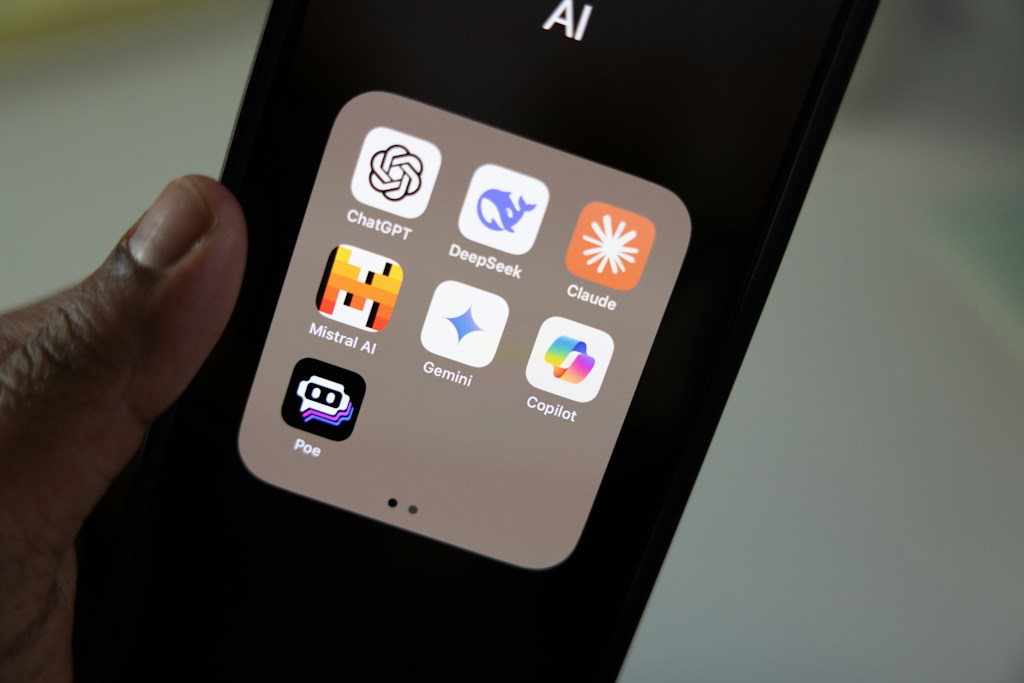
General-Purpose AI Assistants: ChatGPT, Claude, Gemini
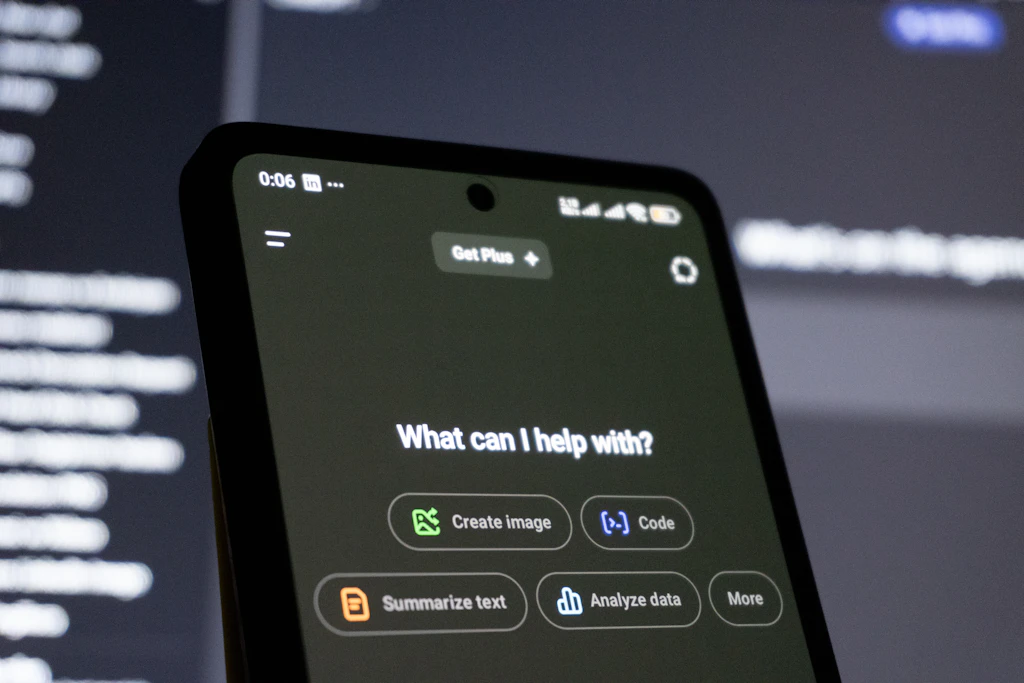
These are the three tools most businesses encounter first, and for good reason — they are the most versatile.
ChatGPT (GPT-4o, OpenAI). The most widely deployed AI tool for business use. Capable of drafting emails, summarising documents, generating marketing copy, answering questions from a knowledge base, and writing basic code. GPT-4o, the paid tier, handles complex instructions well and maintains coherence over long documents. The free tier (GPT-4o mini) is noticeably weaker for business writing that requires precision. Practical limit: ChatGPT does not know your business unless you tell it. Every session requires context-setting, or you use a persistent system prompt to carry that context forward.
Claude (Anthropic). Claude's distinctive quality is caution. Where other models generate confident answers to questions they should not be confident about, Claude more often flags uncertainty rather than fabricating. For a small business owner using AI to draft client-facing communications, that tendency to acknowledge limits is practically valuable — a wrong answer in a customer email costs more than a slightly slower one. Claude also handles nuanced editing tasks well, including restructuring arguments and maintaining a consistent tone across long pieces.
Gemini (Google). Gemini's strongest case for small businesses is ecosystem integration: it connects directly into Gmail, Google Docs, and Google Sheets. If your team already runs on Google Workspace, Gemini can summarise email threads, draft replies, and populate spreadsheets without switching context. As a standalone writing assistant, its output quality sits slightly behind GPT-4o and Claude for complex tasks, but the workflow integration offsets that gap for many uses.
Which to start with. If you are new to AI tools, start with one general-purpose assistant and use it for 30 days on a single task — drafting email replies, for instance. Switching between tools before establishing a baseline is a reliable way to waste time without learning anything.
Category-Specific Tools: Where Specialisation Pays Off

General-purpose assistants are strong at text. For other content types, specialised tools close the gap considerably.
Jasper (content marketing). Built specifically for marketing teams generating high volumes of content — blog posts, ad copy, email sequences, social campaigns. Jasper's value over ChatGPT is not raw quality but workflow: it has built-in templates for specific content types, brand voice configuration, and team collaboration features. For a business producing more than 20 pieces of content per month, the structure is worth the additional cost. For occasional content needs, ChatGPT does the same job without the subscription.
Midjourney (image generation). The strongest image generation tool currently available for quality and stylistic control. A small business needing custom visuals for social media, product mockups, or marketing materials can produce professional-looking images in minutes that would previously have required a designer or a stock photo budget. Limitation: Midjourney requires a Discord account to use, which creates a friction point. DALL·E (built into ChatGPT) is more accessible but produces noticeably lower quality for anything beyond simple illustrations.
Perplexity (research and sourcing). Where ChatGPT and Claude draw on training data with a knowledge cutoff, Perplexity retrieves live information from the web and cites its sources. For a business owner who needs to quickly research a competitor, understand an industry trend, or check current pricing in a market — Perplexity is significantly more reliable than asking a general LLM, which may give outdated or fabricated figures.
Zapier and Make (automation). Strictly speaking, these are workflow automation platforms, not AI writing tools. But they are among the highest-value AI tools for small businesses because they connect the tools you already use and remove manual steps between them. The AI components — classifying incoming emails, extracting data from documents, triggering actions based on content — are where the time savings concentrate. These tools are covered in depth in AI Automation for Small Business: What It Can Replace and Where to Start.
What Is Genuinely Overhyped
Not every category deserves the attention it receives.
AI-generated video. Tools like Sora, Runway, and Synthesia generate short video clips from text prompts or images. The results are visually impressive in demos, inconsistent in practice, and require significant editing to be usable for anything client-facing. For most small businesses, the time to produce a passable AI video currently exceeds the time to film something real with a phone. Worth monitoring, not deploying yet.
AI voice assistants for customer calls. Phone-based AI agents that handle inbound calls are improving rapidly, but the failure modes — misunderstanding accents, mishandling complex queries, failing to transfer appropriately — are still expensive for small businesses where reputation is local and personal. A missed handoff from a bot to a human costs more than a missed call.
"All-in-one AI platforms." Several products have launched promising to replace your entire marketing stack with a single AI subscription. In practice, they tend to do many things at a mediocre level. A business that generates strong content from Claude and schedules it through Buffer outperforms one using an all-in-one tool that does neither particularly well.
The Right Starting Point
The businesses that get genuine returns from AI tools are not the ones that adopt the most tools. They are the ones that identify one high-volume, low-judgement task and automate it completely before moving on.
Good first candidates: drafting initial replies to recurring customer emails, generating first drafts for weekly social posts, summarising supplier documents or contracts for review. Bad first candidates: anything requiring deep knowledge of your specific client relationships, anything where a mistake creates a legal or reputational risk, anything you only do once a month.
Understanding what a given AI tool can and cannot do is the necessary foundation — covered in more depth in the guide to what artificial intelligence is and how it actually works. The tool landscape will continue to shift. The evaluation framework stays stable: start with your highest-volume problem, match the tool to that problem, measure the outcome, then expand.