
How to Make Money with Digital Marketing: Realistic Timelines and Expectations
"I spent £3,000 on ads and nothing happened." This phrase surfaces often enough that it has started to sound inevitable. But in nearly every case, there are three potential culprits: the wrong channel for the business stage, the wrong measurement of results, or unrealistic expectations about timelines. Rarely is the problem with digital marketing itself.
An honest answer to the question of how to make money with digital marketing requires understanding something more fundamental: different channels have different time dynamics and different return logic. Treating them as equivalent is the mistake from which most disappointments begin.
Paid Advertising: Fast, but Finite
PPC — pay-per-click advertising on Google, Meta, TikTok — produces results within hours of launch. Start a campaign in the morning; traffic arrives the same day. That speed is its genuine value.
Google publishes data showing an average ROI of around 200% for advertisers — two dollars of revenue for every dollar spent. The median ROAS (return on ad spend) for Google Ads in June 2024 was 3.08, according to Enhencer. In well-optimised search campaigns this figure can reach 8:1 — but those results are the product of months of optimisation, not a new campaign.
The weakness is symmetrical to the strength: stop paying and traffic stops immediately. Paid advertising builds no asset. It rents visibility. When the rent stops, the visibility disappears. A business funding its growth entirely through paid advertising is in a permanent dependency on advertising budget — the more it grows, the more it must spend.
The practical application: paid advertising is a tool for rapid feedback and bounded campaigns. It is not a long-term strategy in isolation.
SEO: Slow Start, Durable Return
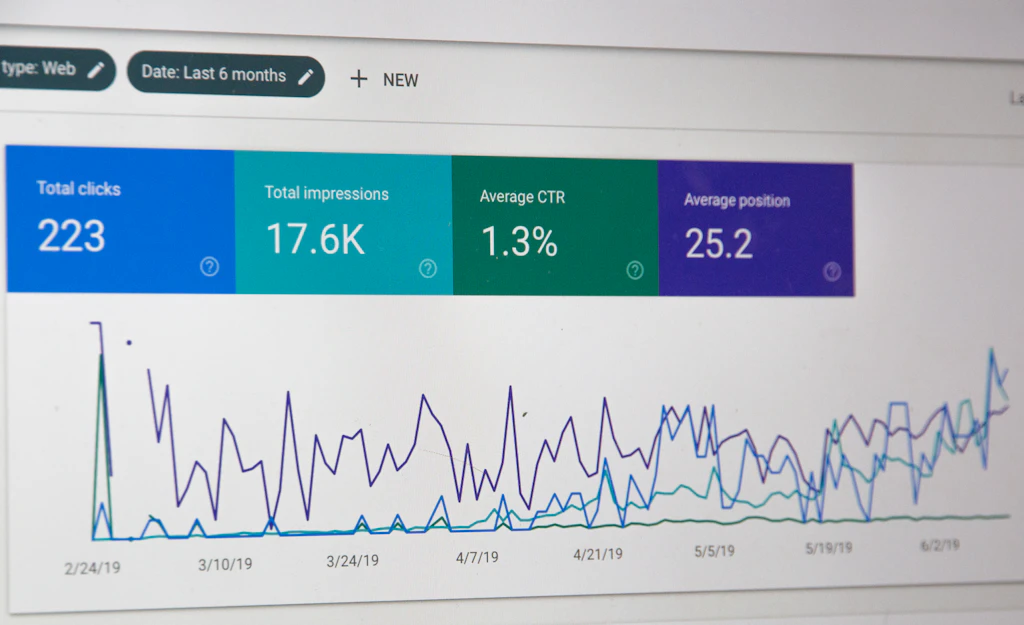
SEO — Search Engine Optimization — is the opposite pole. An Ahrefs survey of 3,680 practitioners found that for most businesses, SEO results become visible after 3–6 months, with meaningful results arriving after 6–12 months. In competitive niches the horizon extends to 12–24 months.
Ahrefs analysed millions of pages and found that only 1.74% of newly created pages reach Google's top 10 within a year. The average age of pages holding the first position exceeds 900 days. Google's ranking systems favour older domains with accumulated authority.
But the return is different in nature. BrightEdge found that organic search generates over 53% of all website traffic, compared to 15% from paid advertising. Organic traffic does not stop when investment stops — it declines slowly, sometimes over years. A well-ranked page continues generating traffic and leads long after the work on it is finished.
SEO is a capital investment with a long payback period, not an operating expense with an immediate return.
Email Marketing: Value That Grows With Time
Email marketing looks straightforward, but its payback is deferred. Litmus publishes data showing ROI between 10:1 and 36:1 — the highest across all digital channels. But that value assumes an existing, quality list.
A list of 200 email addresses has limited commercial value. A list of 2,000 active, engaged contacts with a purchase history is a measurable asset. Building that list takes months of systematic effort. The lesson is to start building this base from day one — not to wait until you need it.
MailerLite's analysis of 3.6 million campaigns shows a median open rate of 43.46% for 2025. That means at 1,000 contacts, around 434 will open your email. At 1% conversion on the content — 4 direct actions from a single send. Small on first glance, but compounded over a regular cadence and a growing list, it becomes significant.
The Typical Mistake: Measuring the Wrong Metrics
"Advertising doesn't work" is a diagnosis drawn from the wrong measurement system in a large proportion of cases. The three most common errors:
Measuring traffic instead of conversions. 1,000 visitors and zero enquiries is not success — regardless of how cheap the click was. The right metric is CPA (cost per acquisition): what does it cost to generate one real customer or lead?
Evaluating SEO after three months. Three months is sufficient for indexing and initial visibility, but not for organic ranking in competitive searches. Evaluating SEO on a quarterly basis is like judging a property investment after three months.
Mixing channels without attribution. A customer sees a Facebook ad, then searches on Google and arrives organically, then buys after an email. Which channel gets the credit? Without a clear attribution model, the arithmetic breaks down and the wrong channels get cut.
Digital Marketing as Capital Allocation
The correct framing is not "how much will I spend on marketing" — it is "how do I allocate capital across channels with different payback horizons."
The practical logic looks like this: paid advertising covers short-term traffic needs and rapid feedback while long-term assets (SEO, email list) mature. Over time, those long-term assets take on the load and dependency on advertising budget decreases. The goal is to build a system in which marketing assets operate independently of continuous cash injection.
That is how to make money with digital marketing at a structural level. The businesses that find it does not work have typically stopped too early, measured the wrong things, or allocated budget to the wrong channel for their specific stage. None of those is a failure of the channel itself.
To understand which channels belong in a broader digital marketing system — and how to make the allocation decision — read our complete guide to what is digital marketing.