SEO for Small Business: Why Your Google Ranking Determines Your Revenue
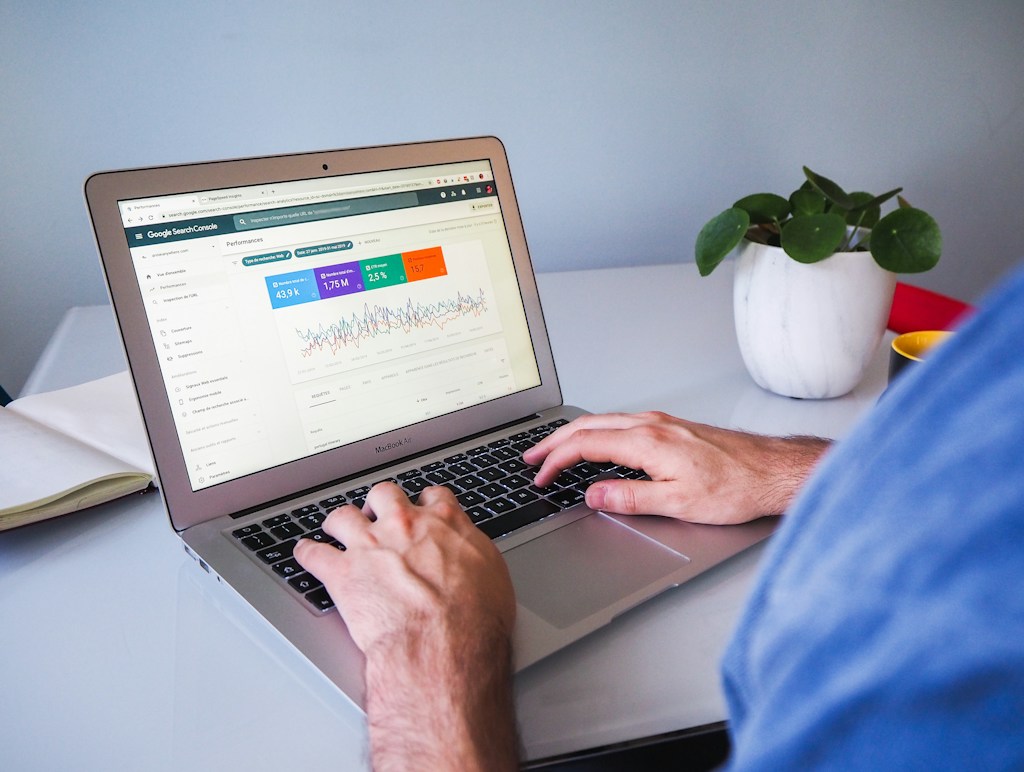
Backlinko analysed over 4 million Google search results and found that the first position receives an average of 27.6% of all clicks. Position 5 gets around 6.3%. Position 10 — under 2.5%. That gap is not linear. It's a cliff. The business in fifth place doesn't receive "a little less" traffic than the one in first — it receives four times less.
Most small business owners hear "SEO" and assume it's for multinational companies with marketing departments. The reality runs in the other direction. A small business with well-targeted local SEO can achieve exceptional visibility at comparatively low competition — territory that large brands have no interest in fighting over.
The Click Distribution: The Chasm Between Position 1 and Position 5
The Backlinko data reveals more than just the difference in click volume. It points to something more consequential: users rarely scroll past the first page. A 2024 SparkToro study found that of every 1,000 Google searches, only 374 in the European Union (and 360 in the United States) result in a click on an organic result. The rest end without a click — either on a Google-owned surface (maps, answer boxes, shopping results) or the user simply closes without taking action.
The uncomfortable implication: if you're not in the top 3 for your key terms, a large share of your potential audience never sees you. Not because they aren't searching. Because Google has placed a more visible competitor in front of them first.
For a small business, a lost position is not just less traffic. It's fewer enquiries, fewer calls, less revenue. The difference between positions 1 and 5 on a keyword with 500 monthly searches can mean dozens of missed contacts every month.
Local SEO: The Biggest Lever for Small Business
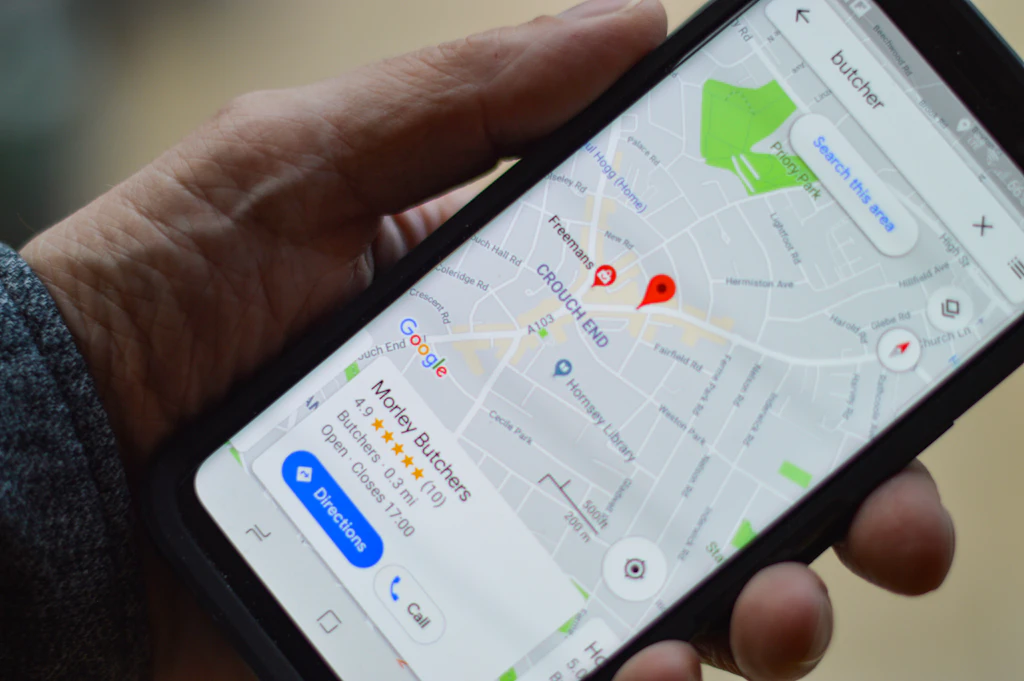
Small businesses have a structural advantage in one specific area: local search.
46% of all Google searches have local intent, according to Backlinko data. 76% of people who search for something nearby visit a business within the same day, and 28% of local searches lead to a purchase — figures Google has published via Think with Google. That conversion readiness is far higher than virtually any other traffic source.
Competition on local keywords is significantly lower than on national terms. "Solicitor" is too broad — hundreds of firms are fighting for it. "Solicitor Exeter" is specific — dozens are. The odds of ranking are incomparably better, and the intent of the searcher is far more concrete.
The central tool of local SEO is the Google Business Profile — the listing that appears on the right side of search results for local queries, and in the "Local Pack," the group of three businesses shown above the organic results. BrightLocal research found that businesses with complete and up-to-date Google Business Profiles receive up to 70% more clicks to their website and requests for directions. Customers are also 2.7 times more likely to consider a business trustworthy when they find a complete profile in Google search.
"My Clients Come Through Referrals — I Don't Need Google"
This argument is common. It's understandable. And it carries real risk.
Referrals are a powerful channel — but an unstable one. They depend on the activity of your existing client base, their personal networks, and chance. When the business is young, the client base is small and referrals are sparse. When the economy contracts, even loyal clients refer less often.
Organic search doesn't fluctuate with the mood of your existing clients. It's a channel where potential clients are actively looking for exactly your service — at the moment they have the need. The difference is structural: with referrals, you're waiting for someone to remember you; with SEO, you appear precisely when they're searching.
There's a further dynamic at play. New-generation clients — even when given a referral — search Google before calling. If your profile is incomplete, your site is slow, or you don't appear for obvious searches, the referral is already half-lost.
Why Small Business Has an Advantage Over Big Brands

A large restaurant chain fights for "restaurant" at the national level. A local restaurant can dominate "restaurant for a birthday dinner Leeds" — a phrase the chain doesn't bother targeting. That's where the value lies for small businesses.
BrightLocal's 2024 research shows that adding photos to a Google Business Profile increases requests for directions by 42% and clicks to a website by 35%. That's not the result of a months-long campaign — it's the result of correct profile setup. For a small business, these low-hanging local SEO actions can produce measurable impact in weeks, not months.
Local SEO isn't the entire picture, of course. For the full mechanics of how SEO works — how Google crawls, indexes, and ranks — read the complete guide to what is SEO for business owners. It explains the three pillars of SEO and why it functions as a long-term asset rather than a marketing expense.
Realistic Expectations: Results After 3–6 Months, Not 3 Weeks
Local SEO moves faster than national SEO, but it still requires patience. An Ahrefs survey of over 3,600 respondents found that most people see their first measurable results within 3–6 months. Significant business impact typically arrives after 6–12 months.
For seo for small business, the practical consequence is clear: SEO is only cost-effective if you're looking at a minimum one-year horizon. If you need short-term visibility, paid advertising may be the better starting point — and once revenue is flowing, SEO can be built alongside it.
The question to answer honestly: are you prepared to invest in a channel whose effect will compound for years — or do you prefer traffic that stops the moment you stop paying?