ERP vs CRM: Which Software Does Your Business Actually Need?
The average cost of implementing an ERP system in a small or medium-sized business ranges from $10,000 to $150,000 just for the initial installation, according to a 2024 analysis by Panorama Consulting. Many of these investments are made before the business has understood exactly what it needs. The result: a system designed for 500 employees, installed in a company of 15.
The distinction between ERP and CRM sounds technical. It is actually a business question dressed up in acronyms.
What Is ERP — and What It Actually Does
ERP stands for Enterprise Resource Planning. But that definition tells you almost nothing useful. A more practical description: an ERP is a system that manages everything happening inside the company.
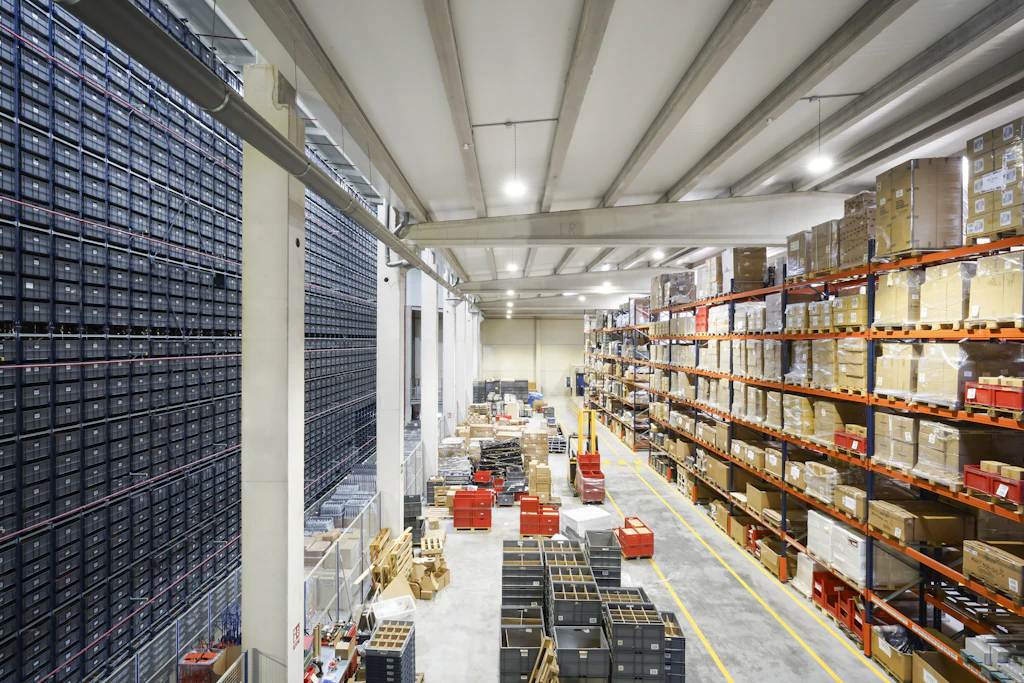
Warehouse — how much stock exists, where it is, when more needs to be ordered. Accounting — revenue, expenses, balance sheet. Production — how much is being made, with what, in how long. Staff — payroll, leave, schedules. When these modules are connected in a single system, a change in one automatically flows through to the others. A product sells from the warehouse — stock falls, accounting registers the revenue, the system flags that a reorder is needed.
The ERP is the operational backbone. It is designed to answer the question: "How does our company work on the inside?"
What Is CRM — and Why It Is Different
CRM stands for Customer Relationship Management. The focus is outward, not inward.
A CRM tracks contacts — who spoke with whom, when, and with what outcome. It manages the sales process: prospect → quote → negotiation → contract → follow-up. It logs complaints and enquiries. It gives the sales team a full history of every customer before every call.
If ERP answers the question "how do we operate," CRM answers the question "who do we work with and how are those relationships developing."
The two systems have fundamentally different logic. ERP is transactional — it records facts. CRM is relational — it tracks context and interaction. Building both on a single platform is technically challenging; this is why most vendors sell them separately or as loosely connected modules.
When You Need ERP, When You Need CRM — and When You Need Both

Small businesses rarely need an ERP in the early stages. An ERP becomes necessary when operations have grown too complex to manage with separate tools — when the warehouse spreadsheet no longer syncs with the accounting system, when the production plan lives in the manager's head, when financial reports require days of manual work.
CRM is needed sooner. Any business where the sales process takes more than one conversation is losing real revenue without a system to track it. If the salesperson is the only place where customer history lives, the company has a structural problem, not just an operational one.
Mid-sized companies with production or complex distribution typically need both. Panorama Consulting's 2024 report found that 80% of mid-sized companies with 100–999 employees already use an ERP system. Among smaller companies — under 100 employees — the adoption rate is similar, but the systems differ significantly in scale and cost.
The Mistake That Costs the Most
The most common and expensive mistake: buying an enterprise ERP for a small business because "we'll grow into it." This logic ignores two facts.
First: ERP systems do not scale down automatically. They require configuration, training, and support proportional to their complexity. A system appropriate for 200 employees does not simply "run in a smaller version" for 10. It demands specialists, processes, and administrative overhead that a small business has no capacity for.
Second: investing too early locks in processes before they have matured. A three-year-old business is managed differently from a ten-year-old one. A system implemented too early can turn adaptability from an advantage into an obstacle.
The right question is not "what system do we want in five years." The right question is "what specific operational friction are we solving right now — and what is the minimum system to address it."
A Practical Framework for Choosing
If you manage a warehouse, production operation, or distribution network and your operational processes require synchronisation across departments — look at ERP. But not enterprise ERP; look at solutions designed for your scale. Odoo on the cloud, Microsoft Dynamics 365 Business Central, or comparable mid-market platforms can start at significantly lower costs than their enterprise equivalents.
If you manage a sales team, have repeat customers, and sell services or products with a longer decision cycle — CRM is the more urgent need. HubSpot offers a free tier that is functional for small teams. Zoho and Pipedrive are solid options at a moderate budget.
If you have both problems — operational chaos and an unstructured sales process — address them sequentially, not in parallel. Implementing ERP and CRM simultaneously is a risky operation even for well-funded companies.
For a deeper understanding of the broader picture — how these systems fit into the wider distinction between types of business software — see the guide to what is software for business owners.